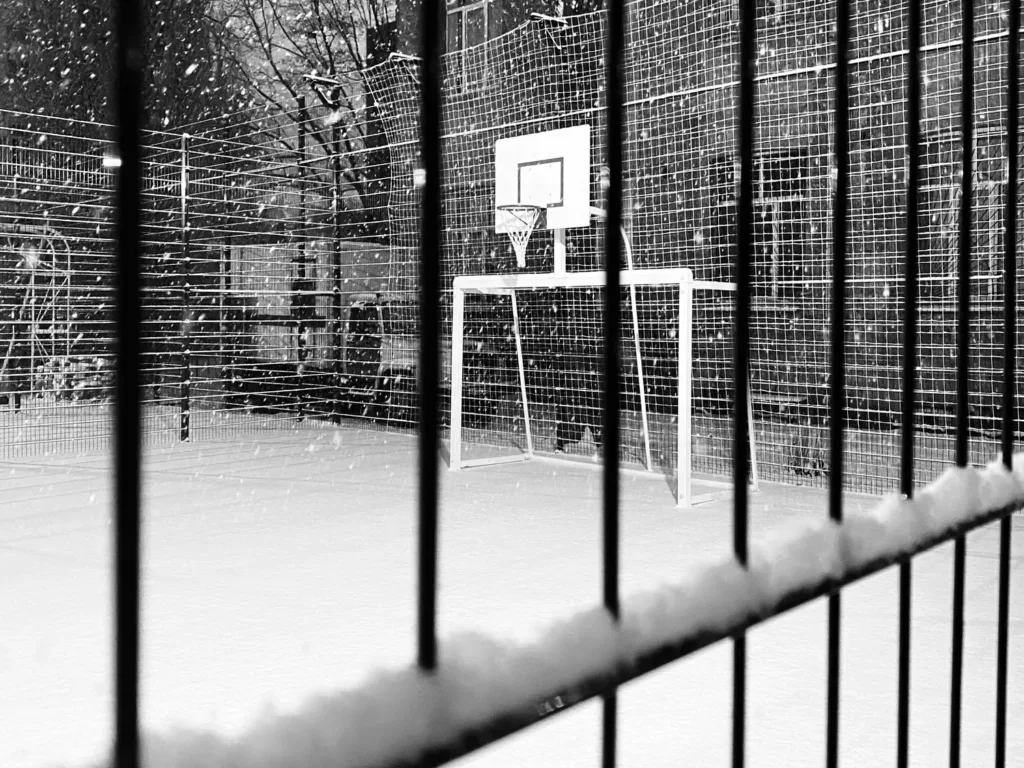
Winter weather can be tough on outdoor courts. Snow and ice not only make courts unusable but can also damage the playing surface if removed improperly or left to pile up. Whether you have a backyard basketball court, pickleball court, or multi-use surface, using the right snow removal techniques is essential for the safety, longevity, and performance of this space.
Below is a practical guide to removing snow safely from your outdoor court while protecting the surface underneath.
Why Proper Snow Removal Matters
Outdoor courts are engineered with specialized coatings and materials designed for traction, drainage, and durability. Using the wrong tools or methods when removing snow can:
- Scratch or gouge the surface
- Compromise traction and playability
- Shorten the lifespan of the court coating
- Create uneven areas that collect water once the snow melts
- Cause painted areas to peel
- Create new ice patches on the playing surface
Removing snow safely helps preserve your investment and ensures your court is ready for play as soon as conditions allow.
Note: Never walk on snow-covered or icy courts, as you could get seriously injured.
Best Tools for Snow Removal on Outdoor Courts
Plastic Shovels or Snow Pushers
Choose lightweight plastic shovels or wide snow pushes with smooth edges. These tools are less likely to scratch or chip acrylic or modular court surfaces compared to metal shovels.
Avoid:
- Metal shovels or blades
- Ice choppers or picks
- Sharp-edged tools
Snow Blowers (With Caution)
You can use a snow blower on your outdoor court if it meets the following conditions:
- Rubber, no non-metal auger
- Adjustable skid shoes set high enough to avoid surface contact
- No tire chains or metal tracks
Always check the manufacturer’s recommendations for both the blower and your court surface.
Additional Tip: You can use a push broom to brush off light, powdery snow.
Safe Snow Removal Techniques
Remove Snow Early and Often
Fresh snow is lighter and easier to remove than compacted or icy buildup. Clearing snow soon after it falls reduces the need for aggressive scraping later.
Push, Don’t Scrape
Use a gentle pushing motion rather than digging into the surface. Keep the shovel or pusher slightly angled, so you can glide easily over the surface.
Leave a Thin Protective Layer
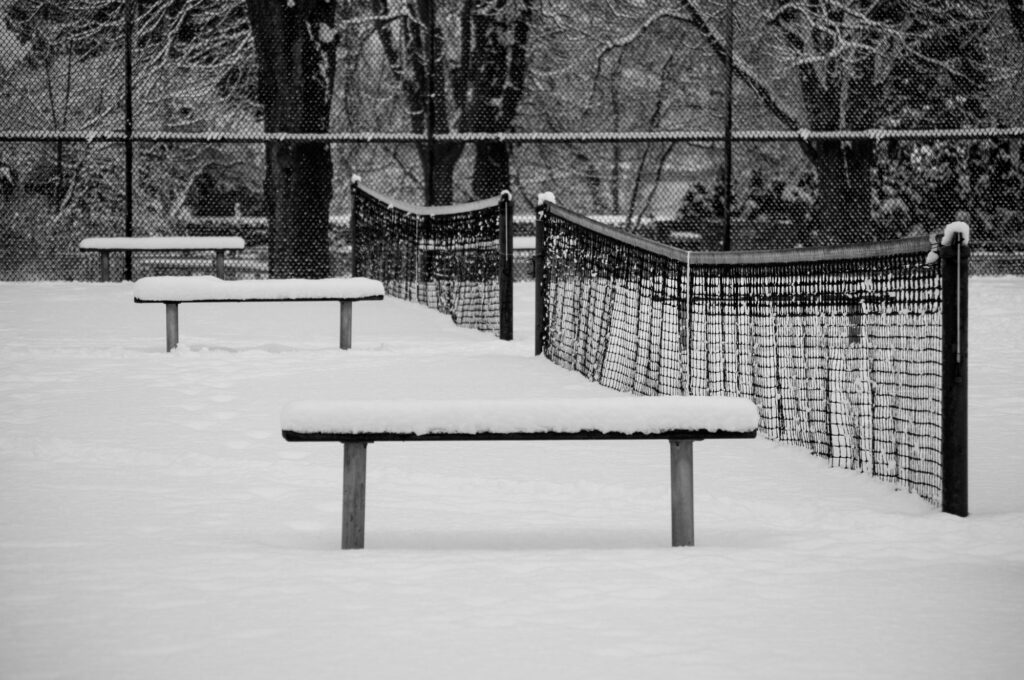
It’s better to leave a very thin layer of snow (1/4 to 1/2 inch) than risk damaging the court by scraping too aggressively. This remaining layer will melt naturally as temperatures rise.
Clear in One Direction
Whenever possible, push snow in a consistent direction toward the court edges. This reduces stress on seams, joints, and coatings.
Protect Yourself
When removing snow, remember to take care of yourself. Use your legs, not your back, and pivot, don’t twist, when tossing loads. If you have a large area to clear, remember to take breaks and pace yourself.
Dealing with Ice on Outdoor Courts
Ice is one of the biggest challenges you’ll face when it comes to winter court maintenance. To protect your court but keep it from becoming slick:
Avoid Rock Salt and Harsh Deicers
Traditional rock salt and chemical deicers can:
- Break down court coatings
- Leave residue that affects traction
- Cause discoloration or surface wear
Use Court-Safe Deicing Alternatives
If you need to get rid of ice, look for products labeled as:
- Court safe
- Calcium magnesium acetate (CMA)
- Non-corrosive and non-abrasive
Always test a small, inconspicuous area first and follow product instructions carefully.
Tip: If you don’t plan on using your court during the winter, cover it with a heavy-duty tarp to protect the surface from snow and ice accumulation.
After the Snow Melts: Inspect Your Court
Once winter conditions ease:
- Inspect for cracks, chips, or peeling
- Check drainage areas for debris
- Clean off any residue left behind by snow or deicers
- Address minor issues early to prevent more costly repairs later in the spring
When to Consider Professional Help
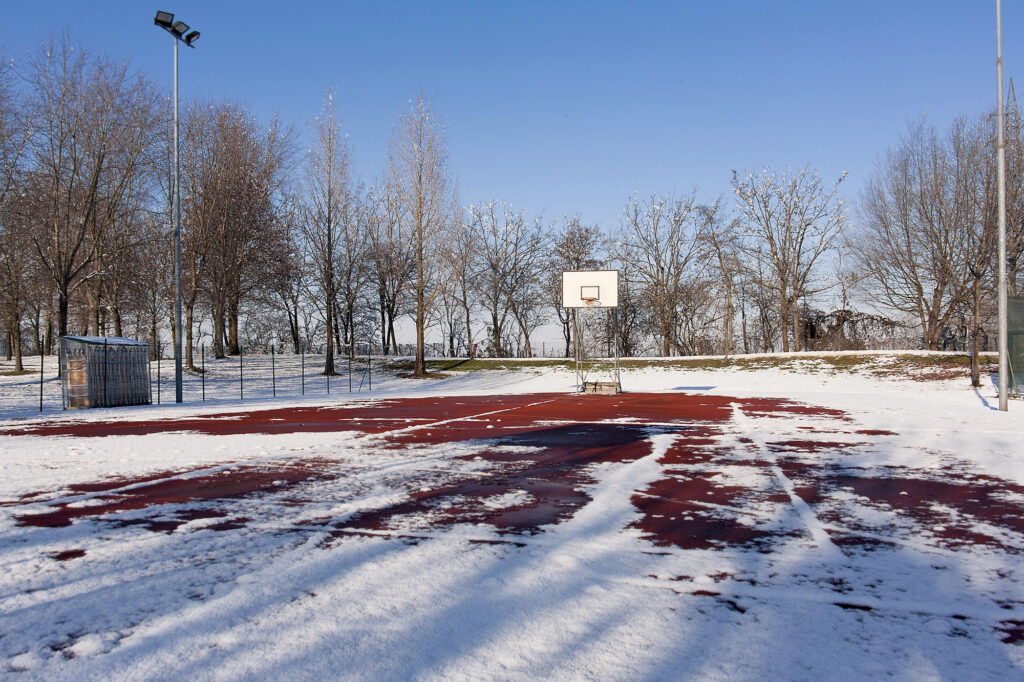
If your area experiences heavy snowfall or frequent freeze-thaw cycles, you may want to invest in professional seasonal maintenance to protect your court and keep you safe. Experts have the proper tools and experience to remove snow without damaging specialized court surfaces.
Keep Your Outdoor Court Winter-Ready
Removing snow safely from your court helps protect its appearance, performance, and lifespan. With the right tools, gentle techniques, and court-safe products, you can minimize winter damage and be ready for play when warmer weather returns.
If you have questions about winter maintenance or need help preparing your court for the off-season, contact Precise Pickleball Courts for tailored recommendations.