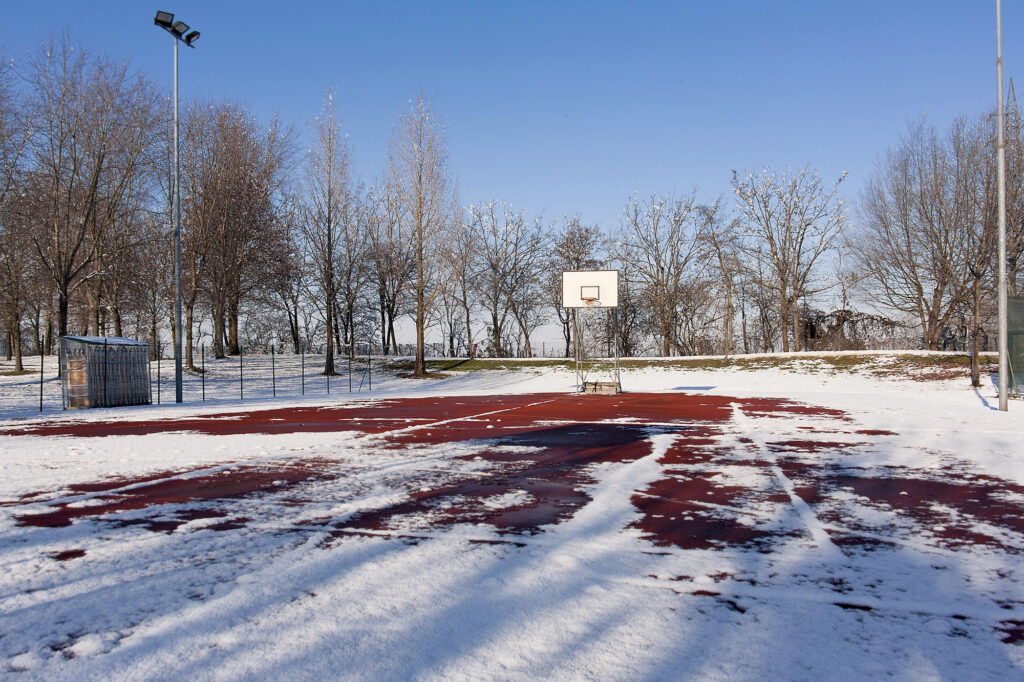
An outdoor court, whether for basketball, tennis, pickleball, or multiple sports, is a valuable asset for homes, schools, and communities. But to keep it safe, attractive, and in good condition, you need to invest in year-round maintenance. Each season brings its own challenges and requirements. Here’s how to care for your court during spring, summer, fall, and winter.
Summer: Protect from Heat and Heavy Use
During the summer, your court can become damaged from:
UV Rays — Increased sunlight and UV radiation can cause colors to fade and the court to degrade.
Cracking — Thermal expansion and contraction from temperature fluctuations can lead to cracks on the court surface.
Softening and Wear — High temperatures can soften asphalt and acrylic surfaces, increasing their susceptibility to wear and tear from play.
Bubbling — Moisture trapped beneath the surface can expand in the heat, causing bubbles or blisters to form on the court
Summer Maintenance:
Clean Weekly — Summer means more time spent on your court, which leads to more dirt, sweat, and shoe marks. Sweep or blow off leaves, dust, and debris regularly. Wash the surface with mild detergent and a soft brush or the soft wash setting on your power washer.
Inspect for Cracks or Fading — Inspect the court surface weekly for signs of wear and tear, such as cracks, chips, or fading. Address any issues promptly to prevent them from worsening. For significant damage or resurfacing, consult a professional.
Limit Water Exposure — If you have sprinklers nearby, make sure they aren’t soaking the court daily — standing water can deteriorate coatings. However, if your court isn’t near any water sources, lightly spray the surface to help prevent cracking.
Reapply Surface Coatings (If Needed) — Summer is the best season for resurfacing or re-striping, as warm temperatures help materials cure.
Fall: Prepare for Leaves & Moisture
During the fall, your court can suffer from:
Debris Accumulation — Leaves, twigs, and other organic debris can trap moisture, leading to mold, mildew, and surface damage.
Moisture and Freezing — Water can seep into cracks and freeze, causing them to expand and worsen, leading to structural damage. Early ice and snow can also damage the court surface.
Strong Winds — Strong winds can damage nets and windscreens if left up during the season.

Fall Maintenance:
Clear Debris Often — Wet leaves can stain or damage the court if left to sit. Sweep frequently and clean up after storms.
Trim Nearby Trees — Reduce future leaf buildup by cutting back overhanging branches and surrounding vegetation.
Check for Drainage Issues — Heavy rains can reveal clogged drains or low spots. Make sure water drains properly to prevent pooling.
Schedule Minor Repairs — Fall is a good time to seal any new cracks or touch up worn paint before winter sets in.
Winter: Minimize Damage from Ice & Snow
During the winter, your court develops damage from:
Freeze-Thaw Cycles — Water can seep into cracks and pores on the court surface during warmer temperatures and freeze and expand during cold temperatures, causing cracks to widen and deepen.
Precipitation Impact — Rain, snow, and ice can exacerbate existing damage and create hazardous playing conditions due to wet surfaces.
Other Factors — Harsh winter conditions can lead to faded lines, worn coatings, and the growth of mold or mildew.
Winter Maintenance:
Remove Snow Carefully — If it snows in the fall, use a plastic shovel or soft broom to remove it. Avoid metal shovels or snow blowers that can damage the surface.
Don’t Use Salt or De-icers — These can erode the court surface or harm surrounding landscaping. If needed, use sand sparingly for traction.
Cover the Court (Optional) — For courts that see little or no use during winter, consider using a court cover to reduce wear and keep debris off.
Monitor for Freeze Damage — Periodically check for cracks caused by freeze-thaw cycles and plan for spring repairs.
Spring: Deep Clean & Inspect
Springtime can reveal damage hidden during the winter, including:
Surface Cracks — Freeze-thaw cycles during the winter can lead to cracks, chips, and surface wear.
Drainage — Spring rain can lead to water pooling on the court, which can lead to surface damage and mold growth.
Equipment — Nets, hoops, and other equipment can become torn and damaged if left out during the winter.
Spring Maintenance:
Soft Wash — Remove grime, moss, and mildew from winter, using a low-pressure setting on your pressure washer to avoid damaging coatings.
Full Inspection — Check for cracks, peeling paint, drainage problems, or shifting in the foundation from winter weather.

Schedule Resurfacing if Needed — Spring is a great time to do yearly maintenance, fix any winter damage, and refresh the court for a new season. If lines have faded, now is the time to re-stripe while the weather is mild and dry.
Why Seasonal Maintenance Matters
Regular, seasonal maintenance isn’t just about looks — it helps prevent costly repairs, extend the life of your court, and keep players safe. A little attention each season goes a long way in protecting your investment and ensuring year-round fun. If you’re not sure where to start or notice more serious issues, you may need to call in a professional.