When designing a backyard court, you may wonder how you can accommodate multiple sports on one surface without cluttering the space. Many homeowners opt for a multi-use court that allows them to play basketball, tennis, pickleball, volleyball, and other sports on the same surface. However, to make a multi-use space work, you need to plan carefully.
Here’s what you need to know about court markings and design.
Prioritize Sports and Usage
Before adding lines, decide which sports you want to prioritize. High-use sports should have the most prominent markings. For example, basketball requires larger key and three-point lines that are easy to see, while pickleball uses smaller court dimensions and needs contrasting colors to help distinguish it from larger sports. Volleyball often only needs removable nets for play, so court lines can be secondary.
Knowing usage patterns helps you avoid a confusing “spaghetti” of lines.
Use Color-Coding for Clarity
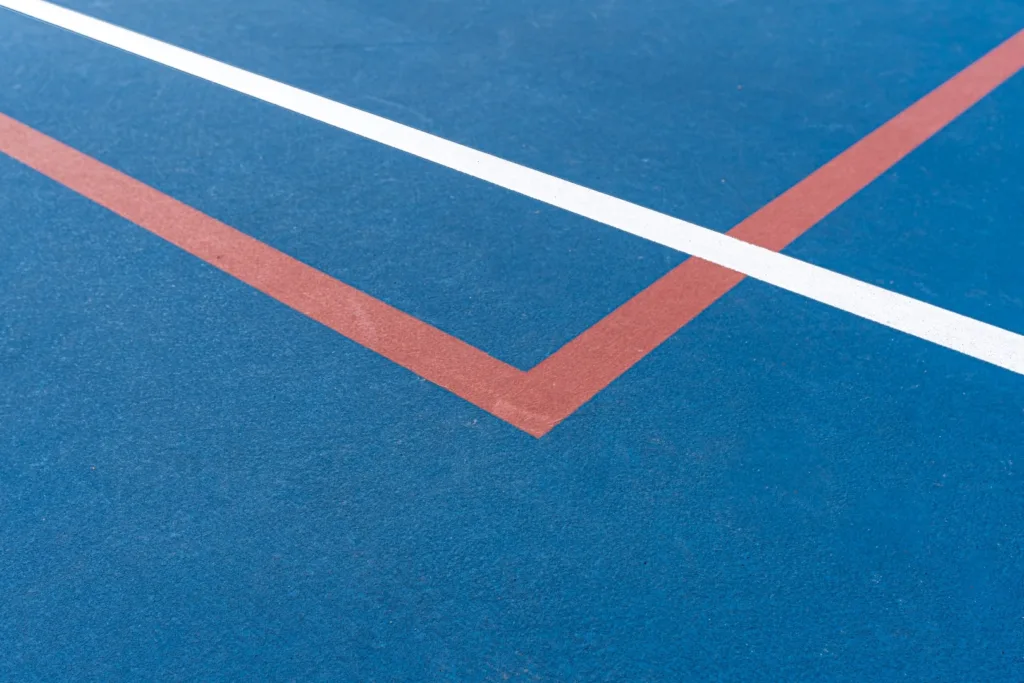
Color-coding is the easiest way to differentiate markings for multiple sports. Consider using white for basketball, yellow for volleyball, blue or green for tennis, and red or orange for pickleball. Colors should contrast well with the court surfaces and with each other to avoid visual confusion.
Consider Line Widths
Varying line widths can also help you separate sports. Basketball lines typically need to be two inches wide for visibility, tennis or pickleball lines can be one inch wide, and volleyball lines can be even narrower if the net and posts are the main focus.
This subtle difference helps reduce visual confusion and keep each sport playable.
Minimize Visual Clutter
To further minimize visual clutter, use dashed or broken lines for secondary sports, keep primary sport markings solid and bold, and avoid overlapping key areas (like basketball free-throw lanes and pickleball kitchens) when possible. A clean design improves both safety and user experience.
Note: Consider incorporating background shading to differentiate play areas without adding more lines.
Plan for Net and Hoop Placement
For multi-use courts, nets and hoops should be adaptable. Mount basketball hoops on retractable poles or wall brackets to avoid interference. Use removable or adjustable posts for tennis or volleyball to switch sports easily, and portable nets for pickleball. This flexibility keeps the court safe and functional for all activities.
Consider Surface and Materials
The court surface itself affects markings and durability. Acrylic or synthetic surfaces keep lines long-lasting and bright. Concrete or asphalt can handle multiple layers of paint, though it may require resurfacing over time.
In addition to increasing paint lifespan, your court surface should be safe for different sports, from basketball running to quick pickleball stops.
Maintain and Refresh Lines Regularly
Even the best color-coded, multi-use space can degrade over time due to heavy use. To ensure court longevity, you should repaint lines every few years or when fading occurs, keep the court clean to maintain visibility, and inspect markings after heavy use or seasonal weather changes.
To keep lines from fading prematurely, use durable paint. High contrast, non-slip polyurethane or epoxy-based paint will last longer and create a better playing experience.
Consider the Weather, Climate, and Season
Weather can impact both court performance and markings. In colder climates, choose coatings that resist cracking and fading, and in hot, sunny areas, use UV-resistant paint to maintain color clarity. Additionally, ensure your court has proper drainage to prevent puddles that can obscure lines and damage surfaces.
Think About Orientation and Layout
Many homeowners often overlook court orientation, even though it can impact playability across sports. Consider a north-south orientation to help minimize sun glare, especially when playing tennis and pickleball. Position basketball hoops so players aren’t shooting directly into the sun during peak hours, and leave adequate run-off space (buffer zones) around each layout to prevent collisions.
Careful layout planning ensures players can have fun and stay safe on the court.
Work with Professionals
Partnering with experienced court designers or contractors can make a major difference.
- They can create precise layouts that prevent line conflicts
- Ensure proper surface preparation and paint application
- Recommend the best materials for durability and performance
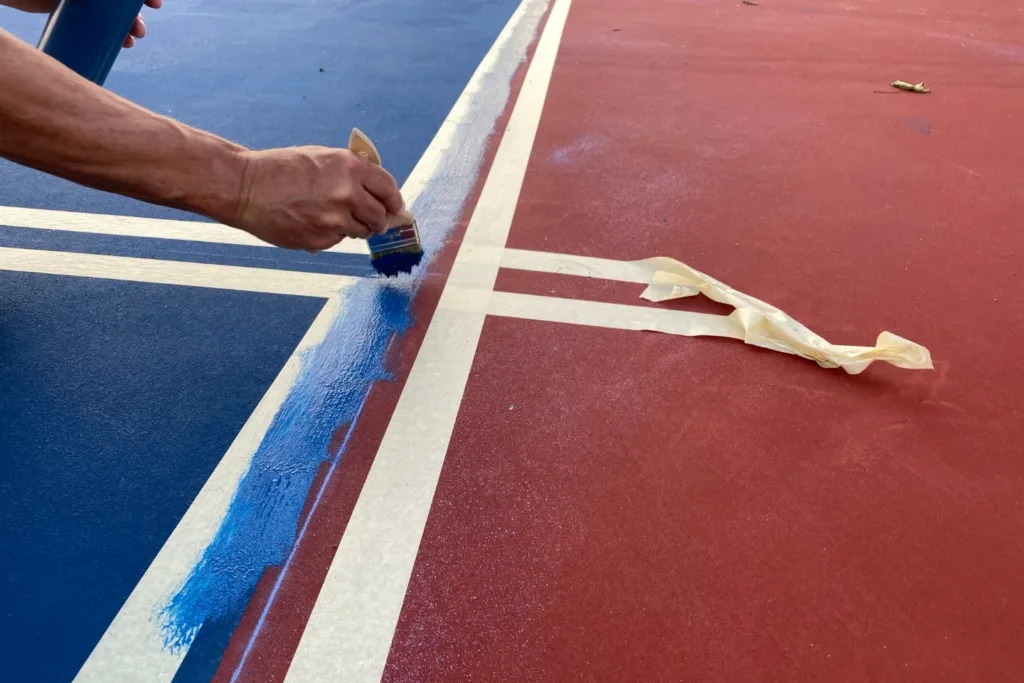
A professionally designed multi-use court reduces costly mistakes and maximizes long-term usability.
Invest in a Multi-Use Court this Season
An intentionally designed, multi-use court maximizes space, encourages participation in multiple sports, and reduces costs by combining facilities. With careful planning, color-coding, and flexible equipment, you can host basketball, tennis, pickleball, and volleyball on your court without any confusion.
Creating a multi-use court is not only about painted lines but also thoughtful design that ensures every player enjoys the game.